AUDUBON ADVISORY
Audubon’s Twice-Monthly Update From Washington, D.C.

IN THIS ISSUE:
·       
Audubon’s New TAKE ACTION Center
·       
Congress Approves FY03 Budget
·       
Comment Period on NPRA
·        Issue Links
·        Great Backyard Bird Count

CHECK OUT OUR NEW TAKE ACTION CENTER

            You wanted an easier way to communicate with your lawmakers and government agencies on issues impacting birds, wildlife and our shared environment. You wanted the ability to instantly identify where your lawmakers are positioned on conservation issues. You wanted to send Letters-to-the-Editor of your local newspapers on these issues, and you wanted to keep track of it all. Well, you asked for it, and we’re delivering! These services and more are all available to you via our upgraded TAKE ACTION website.  Check it out today by clicking onto this link, http://www.capitolconnect.com/audubon/.   As our TAKE ACTION Center is designed with you in mind, please keep those suggestions coming!  Many thanks for your on-going support!

CONGRESS APPROVES BUDGET FOR FY03

Now Getting Started on FY04

The U.S. Congress finally approved the federal government’s budget for Fiscal Year 2003 – a year that began October 1, 2002 and ends September 30, 2003.  And as reported in the last issue of the Audubon Advisory, Congress agreed to prevent court challenges and public input on a soon-to-be released wilderness plan for the Tongass National Forest – America’s great temperate rainforest, as well allow for increased logging on other federal lands. They failed to reverse recent actions by the Administration that roll-back provisions of the Clean Air Act, and agreed to spend millions of taxpayer dollars on destructive and unnecessary water projects that will destroy more than 200,000 acres of prime wetlands to appease a tiny number of special interests. And at the last minute, a handful of politically powerful Senators and Representatives added another provision to the bill that opens the door to “pre- leasing” activity with regard to oil drilling in the Arctic National Wildlife Refuge.  An analysis of the language relevant to the Arctic shows that it would not authorize any new exploration or other physical activity in the Arctic Refuge, but would allow quicker action on the ground if the Congress authorizes drilling.  The good news is it could have been worse!  Due to an outpouring of opposition by Audubon, conservation organizations across the country and the media, additional anti-environment proposals were removed at the last minute!  The bill does include funding for a number of other bird, wildlife and other conservation programs, including approval for a critical, lynchpin project necessary for the Everglades restoration program to move forward; an increase in funding for America’s National Wildlife Refuges, and funding for the Neo-tropical Migratory Bird Conservation Act.

Again, while some of the backroom, underhanded efforts set a less-than-positive course for maintaining existing environmental protections, we’re not giving up any time soon!  Fortunately, neither are those Members of Congress who believe in restoring and protecting our natural legacy, securing adequate funding for vital natural resource protection programs, and preserving key natural resource protections.  And these efforts are underway, as Congress begins the budget process for Fiscal Year 2004.

On February 3rd, the Bush Administration released its budget proposal for Fiscal Year 2004, initiating the process in which the U.S. Congress determines how to fund the federal government from October 1, 2003, through September 30, 2004. Submitted every year at this time, this enormous bill lays out the President’s funding allotments for every federal government agency and the programs and services coordinated by those agencies, such as taxes, social security, and the U.S. Mail. It also includes funding requests for the Environmental Protection Agency, the National Oceanic and Atmospheric Administration, and the U.S. Department of the Interior – the government agency responsible for the bulk of our national conservation programs, specifically our National Parks, National Wildlife Refuges, Endangered Species and migratory bird conservation programs. The Administration’s proposal now moves to Congress, where the U.S. House and Senate will review the President’s funding requests, and make their own – and then final – determinations for the country.

So what does the President’s proposal hold for conservation for next year? Overall, the needs of birds, wildlife and environmental protection continue to outstrip the funding levels advocated by the Administration. In this budget proposal, there are a few rays of conservation sunshine, there are significant holes and omissions, and a few bad ideas. Our challenge is to work to increase the funding levels for birds and wildlife with the Congress.  Read our summary of the Administration’s proposal by clicking onto this link now: http://www.audubon.org/campaign/budget.html

And keep an eye on upcoming issues of the Audubon Advisory where we’ll provide more information on specific proposals and let you know what you can to do help!  

NEW APPROACH NEEDED FOR THE PETROLEUM RESERVE

Public Has Until March 18th To Weigh-In!

The federal Bureau of Land Management (BLM) is looking to open another 8.8 million acres of the National Petroleum Reserve –Alaska (the “Reserve”) to oil exploration and development, and public has until March 18th to let BLM know what they think about it!

Originally established in 1923 as a secure source of oil for the U.S. Navy, President Gerald Ford moved authority of the Reserve from the Navy to the BLM in 1976 to allow for oil exploration, but production and development were prohibited until authorized by Congress. In 1980, Congress gave that authorization and allowed BLM to lease portions of the reserve for development purposes.  To date, leases have been granted to nearly a dozen oil companies on more than 1.3 million acres, and operational drilling is expected to begin shortly.  The BLM is now looking to lease another 8.8 million acres in the Northwest portion of the Reserve.

Unlike our fight to keep drilling out of the Arctic National Wildlife Refuge, the decision to drill or not drill in the National Petroleum Reserve-Alaska is not a practical option – it’s open for business.  Audubon does not oppose additional oil leasing in the reserve's 8.8-million-acre Northwest Planning Area, so long as the area's special places and values are protected and all oil and gas activities are carried out with high environmental standards.  

Lands within the area have some high oil and gas potential, but also have tremendous wildlife and wilderness values – specifically for threatened species, such as the spectacled and Steller's eider, and migratory birds that travel to many destinations, such as red-throated loons, northern pintails, long-tailed ducks, pectoral sandpipers, and peregrine falcons.    Thus, key parts of the reserve should be protected from oil and gas exploration and development that would harm their habitats and further jeopardize these species!  

Based on an 18-month study led by senior scientist, Dr. John Schoen, Audubon has identified some of the special areas requiring protection are and presented them to BLM in what is called the "Wildlife Habitat Alternative."  The key places are:

·        Kasegaluk Lagoon, hugely important for marine mammals, such as polar bears and beluga whales, and a whole array of migratory waterfowl, shorebirds and seabirds, including  nesting common eiders and staging brant;

·        Peard Bay, with nesting spectacled eiders and greater white-fronted geese;

·        the lower Meade River-Dease Inlet area, with nesting yellow-billed loons and brant, as well as polar bears denning onshore;

·        the Colville River Special Area, an important high-density nesting area for birds of prey; and

·        southern Ikpikpuk River, a nesting area for peregrine falcons. 

Audubon and our partners in conservation are coordinating comments urging the BLM to protect specific areas within the 8.8 million acres by designating them as "special areas" with  carefully chosen “no drill zones,” and to carry out all other development with high environmental standards.    And you can help!   Click onto this link now to send a letter to BLM before March 18, 2003: http://www.capitolconnect.com/audubon/summary.asp?subject=181&flow=2  And encourage your family and friends to do so as well. Remember, the more comments the BLM receives on this issue, the better chance there is they will protect these critical habitats and therefore the species that depend on these areas for survival!

ISSUE LINKS

            Here’s a look at other issues currently pending that you can act on now! Click onto the links provided for more information.

PROTECT THE ARCTIC: Congressional Insiders claim we can expect the first vote on this issue to happen in the coming weeks.  Keep communicating with your lawmakers urging them to oppose efforts to open the Refuge to drilling – that’s the only way we’ll win!  Click onto our special site for more information and to send your letter today!  http://www.protectthearctic.com

CLEAN WATER COMMENTS NEEDED: The public – that means you! – has until March 3, 2003 to encourage the EPA to reinstate Clean Water Act protections for all America’s waters! Click here for more information and to send your comment today: http://www.audubon.org/campaign/cleanwater.html

POPULATION:  Help encourage your lawmakers to make the connection between population and the environment!  Click onto the link now to learn more about this issue and what you can do to help!  http://www.audubonpopulation.org

ENTER THE GREAT BACKYARD BIRD COUNT!

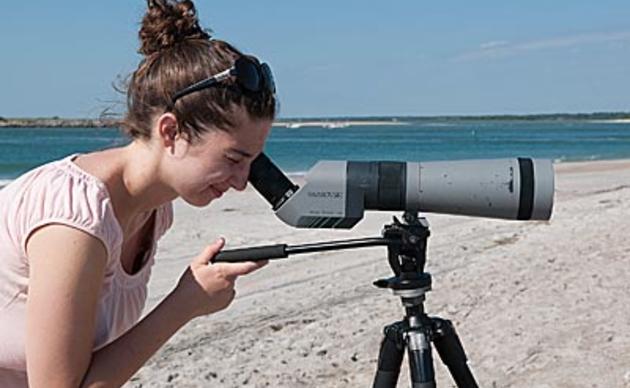
If you have at least 15 minutes, a window and access to computer this weekend, you can help protect America’s birds and habitat by participating in the Sixth Annual Great Backyard Bird Count, brought to you by Audubon and the Cornell Lab of Ornithology!  

All across America, our birds face survival challenges from loss of habitat to introduced predators, to diseases like the West Nile Virus.  This may be affecting the birds that visit your backyard each and every year.  Help us find out!  Between February 14-17th, keep an eye on your backyard or birdfeeder for 15 minutes or more. Then count and identify the birds you see, and report back to Audubon via the Internet.  No experience necessary -- all ages and skill levels are welcome and encouraged to participate – and it’s free!  To enter this year’s Count, view tips on identifying birds in your area, and much, much more, log onto our special website at http://www.birdsource.org/gbbc

We hope you’ll join us this long weekend for the Great Backyard Bird Count!  Happy Birding!

 Audubon Advisory

Audubon Public Policy Division

1150 Connecticut Avenue, NW

Suite 600

Washington, DC 20036

1-800-659-2622

audubonaction@audubon.org